Most consumers understand in the abstract that a contingent real estate transaction carries risk. What they fail to grasp until a deadline passes is how that financial fallout looks in reality.
When a buyer backs away from a new construction agreement because their current property is stalled, they do not just lose the home. They typically forfeit their entire earnest money deposit, alongside any deposits made at the design center. In premium developments, those combined figures represent an immense amount of lost capital.
Contingent sale new construction buyers in Clark County face tight builder deadlines and escalating late fees. They also face the real risk of losing earnest money and design center deposits if their existing home does not sell on time. Most builders are no longer offering traditional contingency arrangements. Planning the full sequence before you sign, not after the pressure mounts, is the only reliable protection.
The Financial Consequences of Contingency Forfeiture
We saw a recent example of contingency fallout involving a listing that remained stagnant while the new construction progressed toward completion. The buyers eventually had to walk away from the transaction because they priced their existing home far above market realities.
Their home sat without offers for nine months, and they made no meaningful price corrections. By the time they made an adjustment, the builder’s completion schedule had collapsed around them, leaving nothing left to negotiate.
“They lost earnest money, they lost their deposits at the design center. It was a really unique home that really hadn’t been priced accordingly. They finally bumped the price down to about $250,000. If they had started with a more realistic list price, they wouldn’t have been in that situation.” – Erin Smiley, Buyer’s Agent, New Construction Market Experts
Milestone Requirements From Regional Homebuilders
Traditional contingency arrangements allowing builders to hold a completed home indefinitely have largely disappeared. The local resale market has softened enough that construction companies refuse to absorb uncertainty without strict contractual protections.
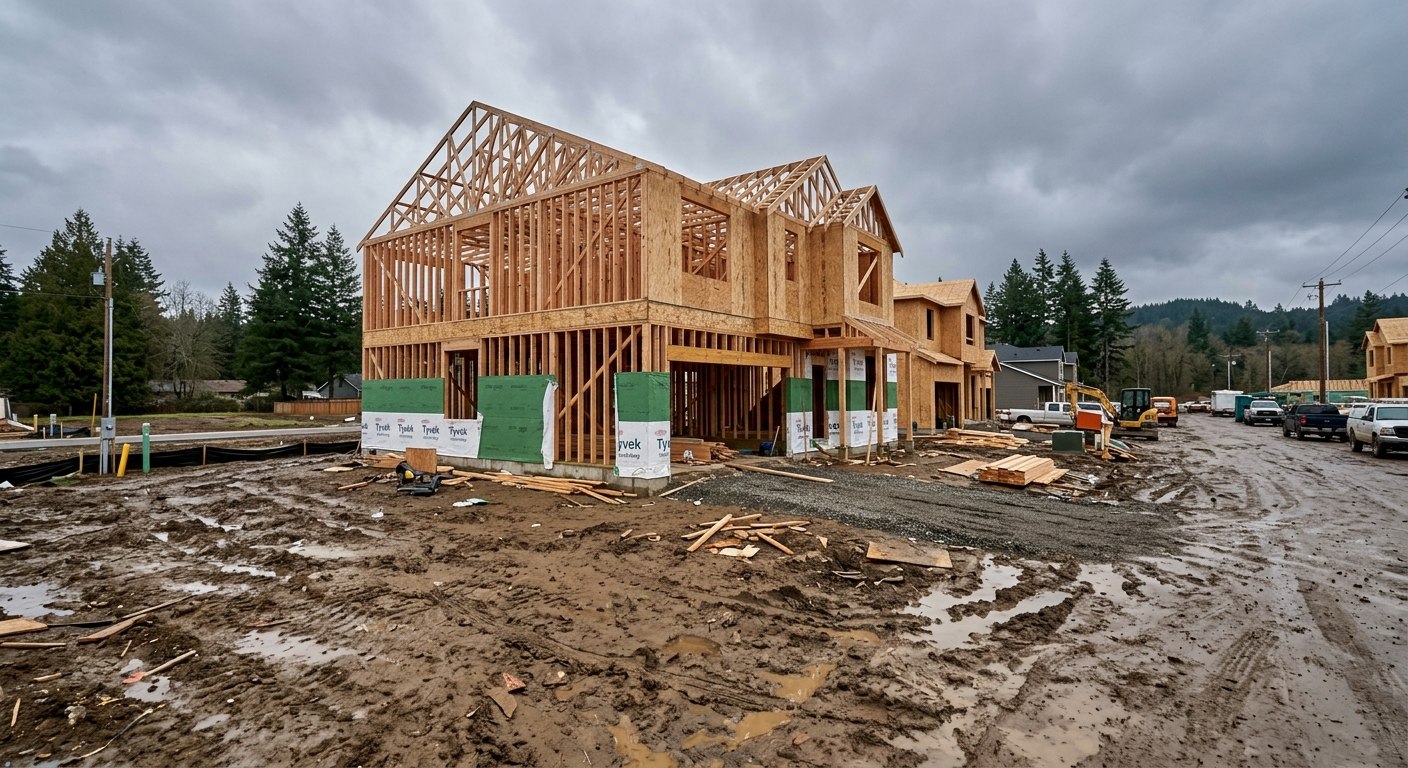
What builders offer instead is a highly structured timeline governed by firm physical build milestones. If you go under contract during the initial dirt phase, your current home must be listed before framing concludes.
If the construction process is further along, your property must be pending sale before the builder proceeds with interior finishes. Missing these deadlines triggers immediate kickout clauses, aggressive extension fees, or total contract cancellation.
Extension penalties have grown far more aggressive as builders transition from flat fees to percentage-based structures. These heavy fees are being actively enforced in current Clark County transactions to protect against carrying costs.
“Builders are not giving contingencies at this point. You’re going to have to put your home on the market almost immediately, or you can’t have it as a contingency. Once that new build is done, they’re going to have to be ready to go and pay for that as well.” – Marci Caputo, Managing Broker, New Construction Market Experts
Risk Mitigation Controls During Active Listing Periods
Local builders are generally willing to extend deadlines for buyers who are actively attempting to perform under the contract. What they will never accommodate is missed deadlines with a lack of communication or total silence from the buyer’s side.
If your current residence is on the market without receiving offers, opening lines of communication with your advocate is vital. If you can demonstrate that you’re acting in good faith and taking steps to ensure a timely sale, the build will be more likely to work with you.
Initial pricing realism matters just as much as consistent outreach during this critical phase. If your current property is overpriced for the local market, communication cannot substitute for the necessary price correction.
An expert who understands how to move inventory in a softer market is essential to your success. They can make the difference between closing on your dream property and forfeiting your hard-earned deposits.
If you are considering a contingent new construction purchase, talk with the NCME team before signing anything.
Crucial Financial Parameters to Establish Before Signing
Successful move-up buyers plan their transaction sequence well before contract signing. That starts with establishing what your current home is worth in the active market.
You must analyze current, honest comparable sales within your neighborhood rather than relying on outdated pricing data. True preparation also includes reviewing the builder’s milestone text to prevent mid-build surprises.
Bridge financing solutions are worth exploring early to help cover financial gaps. Knowing whether you qualify for these short-term programs provides a safety net if your resale timeline unexpectedly slows down.
FAQs about Contingent New Construction Sales
What happens if my existing home does not sell before the new construction is finished?
If your home does not sell within the builder’s required timeline, you may trigger a kickout clause or face late fees. Depending on your agreement, you could also forfeit your earnest money and any deposits paid at the design center. The outcome depends on what your contract says, which makes it essential to review those terms carefully before signing.
How much earnest money is typical in a Clark County new construction contract?
Earnest money deposits for new construction in Clark County typically range from 1% to 3% of the purchase price. On a $550,000 home, that is $5,500 to $16,500 at risk before you account for design center deposits. In higher-priced communities, the combined exposure can reach tens of thousands of dollars.
What are builder late fees, and how do they work in Clark County?
Builder late fees apply when a buyer cannot close by the agreed completion date, most often because their existing home has not sold. Fee structures vary by builder. Some charge a flat monthly amount; others charge a percentage of the purchase price.
Can I negotiate the contingency terms with a builder?
The core timeline thresholds and fee structures are generally non-negotiable with most builders. What is not fixed is how a buyer’s situation is perceived. Buyers with active listings, full marketing support, and a visible plan tend to receive more goodwill from builders. An experienced buyer’s agent can help you manage that relationship and stay positioned as a buyer with a plan rather than a problem.
What is a kickout clause in a new construction contract?
A kickout clause gives the builder the right to cancel your contract or accept a different buyer if you fail to meet a specified milestone. These clauses are increasingly common in Clark County new construction contracts and are enforced when buyers miss the stated threshold. They are one of the key terms to review before signing.
How does a buyer’s agent help with a contingent sale in new construction?
A buyer’s agent manages two parallel timelines: the resale of your existing home and the progress of your new build. That requires knowing what the builder expects at each milestone, what the resale market can realistically support, and how to maintain open communication on both sides. General buyer representation experience is not enough here. Look for an agent with experience in contingent sale negotiations in the local new construction market.
How is pricing an existing home different in a softer resale market?
In a seller’s market, an overpriced home often gets offers anyway because demand absorbs the error. In a softer market, an overpriced home sits. Days on market accumulate, buyer interest fades, and by the time a price correction happens, the momentum is gone. For contingent buyers on a builder’s timeline, that stall is not just frustrating. It is financially dangerous. Pricing accurately from day one is the most important decision a contingent seller can make.
Strategic Alignment Ensures Smooth Contingent Transactions
A contingent purchase requires managing two parallel timelines with hard deadlines, significant capital exposure, and limited builder patience. The buyers who successfully navigate this transition start with accurate pricing and a clear understanding of milestone parameters.
If you are planning to purchase a new construction home in Southwest Washington, schedule a consultation with the team at NCME. Analyzing your financial exposure right now costs nothing, but discovering a contract error later costs far more.
ABOUT THE EXPERT
Marci Caputo is a Managing Broker and co-founder of New Construction Market Experts (NCME) in Vancouver, WA, with 25+ years of real estate experience. She specializes in connecting buyers with new construction homes across SW Washington, making the process buyer-centric, efficient, and economically advantageous.