Relocating to Southwest Washington means buying into a building standard that may look nothing like what you left behind. Your new home is likely to operate in ways you didn’t expect.
Washington’s 2021 energy code mandates heat pump systems for heating and cooling instead of gas furnaces, R60 attic insulation, and induction cooktops in all new construction homes. These requirements are not optional builder choices but state-enforced standards designed to reduce greenhouse gas emissions and lower long-term utility costs for homeowners. While code-compliant homes may have higher upfront costs than in other states, the market keeps pricing competitive with resale homes, and energy savings typically offset the initial investment within a few years.
Washington State’s 2021 energy code changed how builders construct new homes here. Those changes are not optional, builder-specific, or negotiable. Understanding them before you walk into a model home can help you make informed decisions.
Gas Appliances Are Disappearing From Washington’s New Construction
The single biggest shift from Washington’s 2021 energy code is its push to decarbonize residential construction. In practice, that means one thing above everything else: gas furnaces are out, and heat pumps are in.
If you are coming from a climate where a gas furnace is as standard as drywall, this may feel unfamiliar at first. It is not a builder preference or a neighborhood-by-neighborhood quirk. It is a state mandate, with tax incentives that guide builders toward heat pump systems as the primary heating and cooling source.
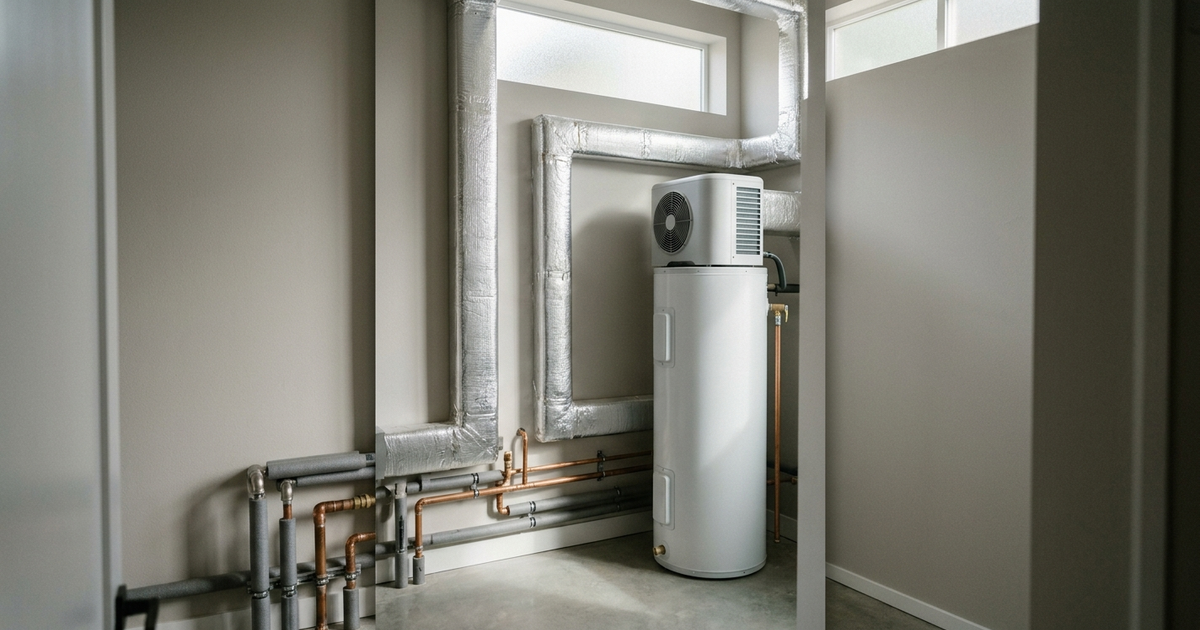
The same logic applies to water heaters. That tankless gas unit you have now, or that your neighbors prefer, is generally not part of Washington’s new construction. What you will find instead is a heat pump water heater, often around 65 gallons. These units are efficient and typically adequate for most homes.
The R60 Insulation Requirement and What It Means for Your Home
Washington’s 2021 energy code requires R60 attic insulation in new construction. That translates to roughly one foot of insulation depth between your ceiling joists. This is not an upgrade or a builder differentiator. It is a baseline code requirement for any permitted new home in the state.
Erin Smiley is a buyer’s agent and co-founder of New Construction Market Experts. She has years of front-line experience walking buyers through Clark County builder communities.
“Know that it’s going to be very limited to have gas cooking, a gas fireplace, and a gas furnace in Washington. We are a green state trying to minimize that greenhouse footprint. And because you have a heat pump, they’ve changed the requirements on the insulation to make sure the system works as efficiently as possible. It’s called R60, about a foot deep in the attic, because they want to keep that heating and cooling inside the house.” – Erin Smiley, Buyer’s Agent / Co-Founder, New Construction Market Experts
That R60 standard is part of a deliberately engineered system. The insulation works in tandem with your heat pump to hold conditioned air inside the home year-round.
The upfront cost of code compliance is already built into the purchase price. The long-term payoff shows up in your monthly utility bills. Most buyers who track their energy costs after the first year find them noticeably lower than in prior homes.
No Gas Range? Here’s the Kitchen Reality in Washington New Builds
For buyers who cook on gas, this is often the hardest adjustment. Gas ranges are essentially off the table in new Washington construction. What builders offer instead is induction cooking. If you have never cooked on an induction stove, it is worth approaching it with curiosity rather than automatic resistance.
Induction heats faster than gas, cleans more easily, and has earned loyalty from serious home cooks who have made the switch. This type of stove is not a fallback option. It is a different technology, and most buyers who live with it for a few months stop missing gas entirely.
One thing worth knowing: induction requires magnetic-compatible cookware. If you are moving your existing pots and pans, run a quick magnet test before you pack them.
Not sure which builder questions actually move the needle? Talk with the NCME team before your first model home visit. One conversation can help you approach the process with clarity.
The Real Price Impact of Washington’s Energy Code on New Construction
Some buyers arrive in Clark County having compared price-per-square-foot across states and wonder why Washington’s new construction sometimes runs higher. Part of that difference reflects real cost inputs from energy code compliance: better insulation, advanced HVAC systems, and different water heating systems. However, the market also helps keep pricing aligned.
Marci Caputo has watched the Clark County market move through multiple cycles and brings a grounded perspective on how energy code costs actually land.
“In theory, the cost savings are going to come down the road. If you’re not using as much heating or cooling because your insulation’s better, that’s a benefit. I don’t think these homes are significantly more expensive. The market keeps each other in balance; you can’t just price new construction significantly higher than resale. The market isn’t going to bear that.” – Marci Caputo, Managing Broker / Co-Founder, New Construction Market Experts
That balance matters when you are comparing budgets across states. New homes still have to compete with existing homes.
The U.S. Department of Energy estimates that homes built to modern energy codes cost measurably less to operate over time. Even if the homes cost more, the savings over time are significant.
What Out-of-State Buyers Need to Know Before Touring Clark County New Construction
The buyers who feel most prepared in Washington’s new construction market are those who understand what is specific to this state. They arrive at a model home ready to focus on the decisions that matter most.
Arriving with accurate expectations is not just about avoiding frustration. It is about directing your attention toward conversations that move the process forward. Builder incentives, lot premiums, upgrade packages, and closing cost contributions are the levers worth working with.
Out-of-state buyers face an additional challenge: limited site visits and no local eyes on the ground. The energy code is just one factor. Builder reputations, HOA structures, lot selection, and design center budget planning all add layers. Having a local representative can make a meaningful difference for out-of-state buyers.
For buyers thinking about the design center, our blog on preparing your design center budget is worth reviewing before your first builder appointment.
Your Questions Answered About Washington New Construction
Are gas appliances available in any new construction homes in Washington?
Gas appliances are limited in Washington’s new construction under the 2021 energy code. Some builders may offer a gas fireplace or gas cooking option in certain communities, but gas furnaces are effectively eliminated in favor of heat pump systems. Confirm appliance availability with each builder before making assumptions, because availability varies by community and builder.
What is a heat pump, and how does it work in the Pacific Northwest climate?
A heat pump is a single system that provides both heating and cooling by moving heat rather than generating it. Modern heat pumps perform reliably across the Pacific Northwest’s temperature range. Because Washington’s 2021 energy code also requires R60 attic insulation, the heat pump operates within a well-sealed building envelope. That significantly improves year-round efficiency.
Is induction cooking actually comparable to gas for serious home cooks?
Induction heats faster than gas, responds to temperature changes quickly, and keeps the cooktop surface cool to the touch. Many professional cooks who have switched report preferring it after a short adjustment period. The main practical difference is that induction requires magnetic-compatible cookware.
Will Washington’s energy code requirements cost more than buying new construction in another state?
Some price differences between Washington’s new construction and homes in other states reflect code-compliance costs. That includes better insulation, heat pump HVAC, and heat pump water heaters. However, builders cannot price new construction significantly above comparable resale inventory without losing buyers to the existing home market. Over time, reduced utility costs from better insulation and efficient systems offset a meaningful portion of that upfront difference.
Should out-of-state buyers visit Clark County in person before committing to new construction?
In-person visits are valuable but not always possible given relocation timelines. A buyer’s agent who works regularly in Clark County builder communities can serve as your local eyes during site visits, framing appointments, and pre-drywall walkthroughs. The key is having representation that attends those milestones on your behalf rather than relying solely on builder updates.
What other details should relocating buyers know about beyond the energy code?
Beyond the energy code, relocating buyers should research HOA structures in the communities they are considering. Buyers should also understand how builder-side agents operate versus independent buyer advocates. It is also smart to plan a design center budget before the appointment. Washington’s new construction process has its own rhythm, and buyers who arrive prepared for it consistently have better outcomes.
Prepared Buyers Make Better Decisions
Out-of-state buyers who adjust their expectations early gain a real advantage in this market. Washington’s building standards reward those who understand how the pieces work together. That knowledge helps you focus on decisions that actually impact your outcome.
At New Construction Market Experts, we prepare buyers for what they will see before their first tour. We help buyers ask better questions and evaluate options with confidence. Get in touch to start your process with experienced guidance.
Marci Caputo is the founder of New Construction Market Experts at NCME. She holds a Managing Broker license in Washington State and earned her Bachelor of Arts from Washington State University. She has served the Vancouver, WA area for 25+ years and was recognized with the Quintessential Woman Award at the Clark County Diamond Tea.
ABOUT THE EXPERT
Marci Caputo is a Managing Broker and co-founder of New Construction Market Experts (NCME) in Vancouver, WA, with 25+ years of real estate experience. She specializes in connecting buyers with new construction homes across SW Washington, making the process buyer-centric, efficient, and economically advantageous.