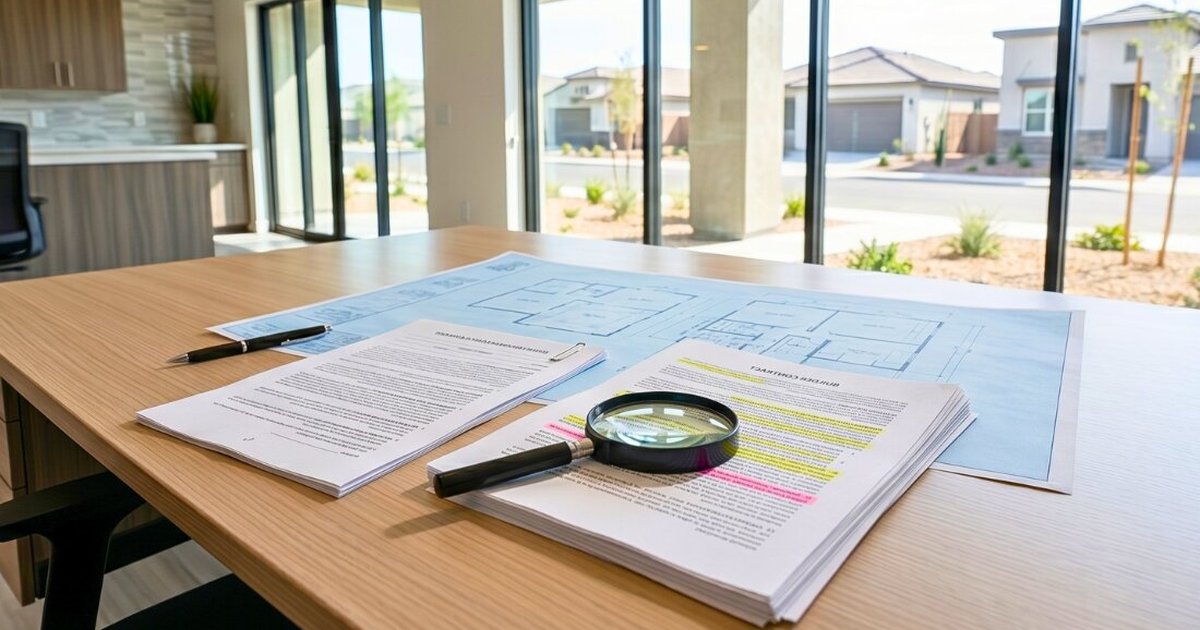
Most buyers spend more time reading a restaurant menu than the contract they execute for a new construction home. That is not a personal criticism, because builder documents run long, use unfamiliar language, and arrive at moments of high excitement.
However, that contract was drafted exclusively by the builder’s legal team to protect corporate interests throughout the construction process. Buyers who understand these terms before signing are far better positioned than those who execute paperwork and hope for the best.
Builder contracts in new construction purchases are standardized legal documents written to protect the seller, not the buyer. Buyers who review key clauses covering dates, earnest money, design center terms, material escalation, and dispute resolution are far better positioned than those who sign and hope for the best. A buyer’s advocate reviews these contracts before you commit, so nothing catches you off guard at closing.
Strict Enforcement of Contractual Calendar Milestones
The single most important reality to comprehend is that dates within a builder agreement represent active commitments rather than general approximations.
There are firm deadlines governing when your earnest money deposit must arrive and when your design center appointments must occur. Missing one of these milestones can weaken your negotiating leverage or trigger heavy financial penalties from the developer.
Marci Caputo analyzes these timeline commitments with remote home buyers before they submit their initial deposits.
“The first thing that comes to mind is dates. Really honing in on every one of those dates, from when that earnest money is due, to when you need to get into that design center appointment, to those final weeks. There are different times when you’re going to walk through the building. So really having those dates, especially if you’re not in the area, and some of those we can do for you.” – Marci Caputo, Managing Broker / Co-Founder, New Construction Market Experts
Dual Exposure Risks Within Deposit and Selection Clauses
Two sections frequently sit apart in the text but work together to create substantial financial exposure for the buyer. These involve your earnest money provisions working alongside your design center selection timelines.
When real estate timing goes wrong, the financial fallout can be significant for an unprepared consumer.
In one scenario, a buyer’s current residence sat on the market for nine months because the initial listing price was too high. By the time they made a correction, their contingent timeline had expired, resulting in the total forfeiture of their deposits.
Design center upgrade options carry separate financial risks because pricing does not lock until you are under contract. Material costs are shifting across Southwest Washington, meaning past pricing sheets no longer represent guaranteed rates for modern builds.
True financial protection requires entering the showroom with a firm budget and recognizing how updates affect your borrowing profile. For a deeper look at managing showroom costs, read our post about how buyers can prepare for the design center meeting.
Legal Limitations Hidden inside Dispute Resolution Sections
Most homebuyers skip the dispute resolution text entirely because the legal terminology feels dense and dry. This section describes your options if construction defects surface.
The Consumer Financial Protection Bureau notes that binding arbitration clauses are standard in consumer agreements and can restrict your ability to pursue claims. Builder contracts follow this pattern by limiting homebuyers’ options for recourse in court.
Marci Caputo reviews this restrictive language with clients because addressing liability parameters after a dispute arises remains incredibly difficult.
“You need to make sure to check for verbiage about what a disagreement looks like regarding legality. Because sometimes it says, ‘Sorry, you don’t really have recourse. You signed this contract because of this verbiage that says you can’t come back to the builder.’ Builders have their own contracts, and they’re a little more in favor of the seller. That’s why we want to help guide you through those contracts and make sure you know what you’re signing.” – Marci Caputo, Managing Broker / Co-Founder, New Construction Market Experts
You cannot easily remove text from a production builder document before signing. However, understanding what you are agreeing to before a conflict surfaces places you in a far safer position.
The Essential Review Protocol for Southwest Washington Buyers
Analyzing the full purchase agreement with an independent expert takes time, but it is time well spent. Here is a practical review checklist used across Clark County and Southwest Washington developments:
- Review all timeline milestones, including earnest money arrivals, showroom dates, site walk-throughs, and close dates.
- Verify your contingent sale terms, including specific kickout thresholds and percentage-based late fees.
- Analyze showroom payment parameters to determine when selection funds become non-refundable.
- Locate any material escalation clauses that allow the construction firm to pass on price spikes to the buyer.
- Evaluate the binding arbitration text to understand your legal options if structural issues emerge.
FAQs About New Construction Builder Contracts
Can a buyer negotiate terms in a new construction builder contract?
Most production builder contracts are standardized documents that the builder will not rewrite for individual buyers. An experienced buyer’s advocate can identify which terms have flexibility, such as close date adjustments, included upgrades, or builder incentives. They can then negotiate those terms for you within certain boundaries.
What is the difference between arbitration and litigation in a builder contract?
Arbitration means that any dispute goes to a private arbitrator rather than a court. Builder contracts with mandatory arbitration clauses typically prevent buyers from taking legal action, even for significant issues like construction defects or missed completion dates. Arbitration can be faster than litigation, but it also limits discovery rights and often caps remedies. If you see mandatory arbitration language in a new construction contract, consult a qualified attorney before signing.
What happens if a buyer misses a date in a new construction contract?
Missing a contractual deadline can trigger penalties, delay your construction timeline, or weaken your negotiating position. In some cases, a missed earnest money deadline could put the contract itself at risk. These consequences vary by builder and contract language, so reviewing every key date with your advocate before signing is essential.
Is earnest money in a new construction purchase refundable?
It depends on the contract terms and the timing of any cancellation. Some builder contracts include contingency periods during which earnest money is refundable. Others are structured so that deposits become non-refundable after certain milestones. Reading those terms carefully before signing is the best way to protect yourself.
Can builder material costs change after I sign a contract?
Some builder contracts include material escalation clauses that allow the builder to pass through cost increases on certain materials before closing. Not all contracts include this language, but it is worth reviewing before you sign. Your advocate can identify escalation clauses and help you understand the exposure they create.
Should I have a real estate attorney review a new construction contract?
If any language in the contract raises questions about your legal rights, recourse, or remedies, consulting a qualified attorney before signing is advisable. A buyer’s agent can walk you through the practical implications of contract terms, but legal interpretation is the domain of a licensed attorney.
Your Builder Contract Deserves Serious Attention
A quick skim leaves too much to chance in a builder contract. Careful review gives you a clear understanding of your obligations and risks. That knowledge leads to better decisions from the outset.
NCME helps buyers review and understand every term before signing. We can guide you through deadlines, deposits, and builder expectations with clarity. Schedule a consultation so you can move forward with the knowledge you need.
Marci is the founder of New Construction Market Experts at New Construction Market Experts. She holds a Managing Broker License from Washington State and a Bachelor of Arts from Washington State University, and has served Clark County buyers for 25+ years.
ABOUT THE EXPERT
Marci is a Managing Broker and co-founder of New Construction Market Experts (NCME) in Vancouver, WA, with 25+ years of real estate experience. She specializes in connecting buyers with new construction homes across SW Washington, making the process buyer-centric, efficient, and economically advantageous.